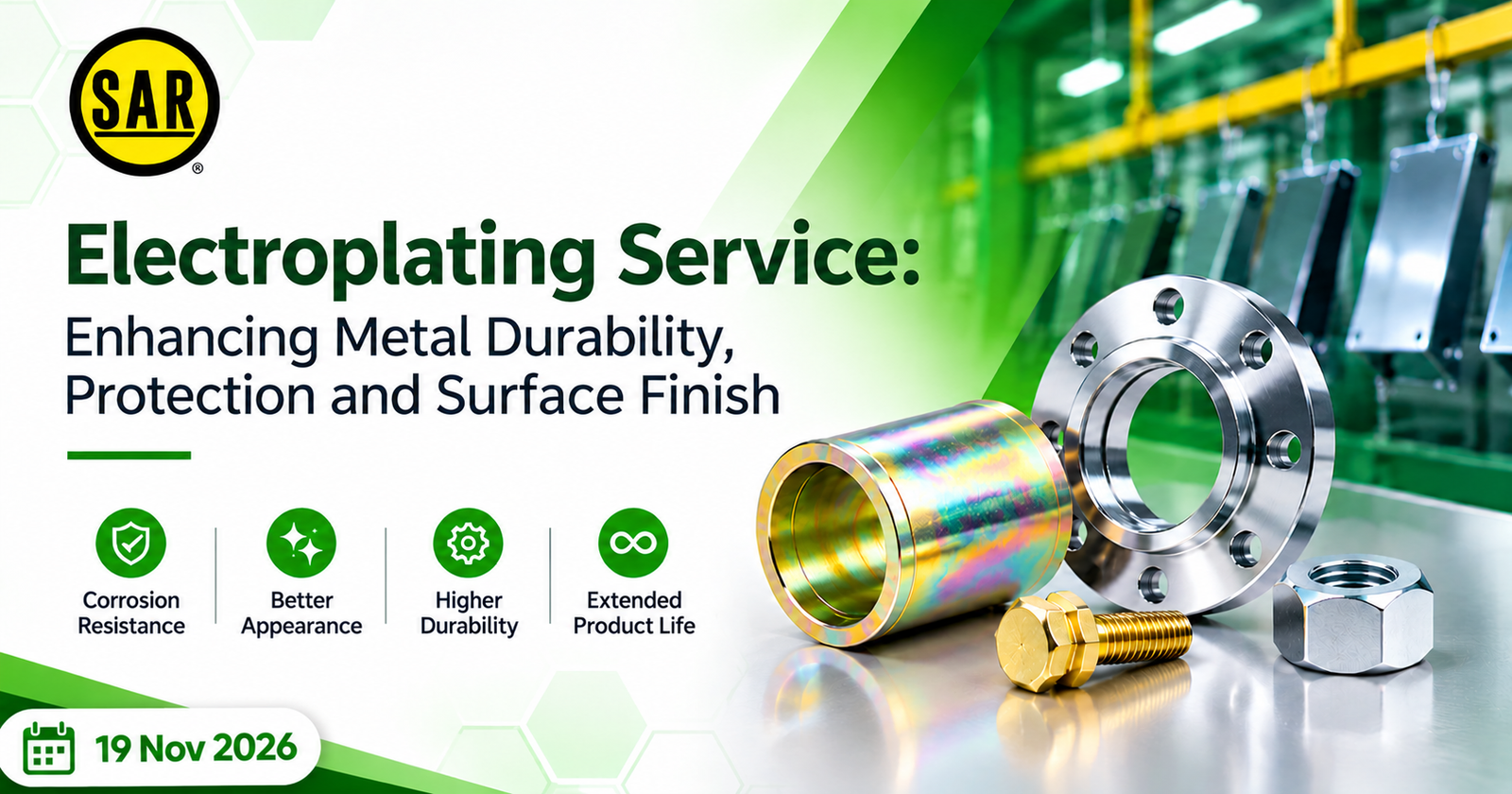
Electroplating Service: Enhancing Metal Durability, Protection and Surface Finish
Quality in the manufacturing business is a matter of material but also surface finish, durability, and ability to withstand environmental factors. Moisture, chemicals, friction and other external factors are common elements that are likely to impact the performance of metal components. That's where an electroplating service comes into play.
Electroplating is a special surface treatment process, in which a thin layer of metal is deposited on a surface to enhance its aesthetic appeal, corrosion resistance and functional performance. Professional Plating Services are used in industries like automotive, electrical, electronics, engineering and manufacturing to improve the quality and longevity of their products.
SAR Coatings specializes in Surface Finishing Solutions, providing businesses with consistent surface finishing solutions and improved product performance and reliability. If manufacturers are aware of the various coating technologies, such as electroplating and Ecoat, they will be able to choose the most suitable one for their application.
What is Electroplating Service?
Electroplating service: It is the process of adding a thin layer of metal to the surface of a part through an electroplating technique. It typically entails placing the part in an electrolyte solution that contains metal ions. When a current is passed through the solution, the metal ions in the solution are deposited on the component, forming a protective or decorative coating.
The following are some common metals employed for electroplating:
- Nickel
- Chromium
- Copper
- Zinc
- Silver
- Gold
Selection of the metal is based on the application, performance and environmental requirements.
Surface characteristics of components can be enhanced with the functional properties preserved by a Professional Plating Services. In addition, electroplating can improve the electrical conductivity and wear resistance of the products and improve the appearance of the products.
How Does the Electroplating Process Work?
The electroplating process involves several important stages to ensure a smooth, uniform and durable coating.
1. Surface Cleaning
The component is thoroughly cleaned to remove dust, oil, grease, rust and other contaminants. Cleaning prepares the coating to have a good bond with the base material.
2. Surface Preparation
For other materials and applications (depending on them), extra processing is needed to prepare the surface for plating.
3. Electroplating
The component is dipped into an electrolyte solution. Electrical current aids the deposition of metal ions upon its surface.
4. Rinsing and Drying
The components are rinsed to flush out any chemical residues and then dried under controlled conditions after they are plated.
5. Quality Inspection
The coated products are tested for coating thickness, surface appearance, adhesion and other application related specifications.
A professional electroplating company adheres to proper process controls throughout the entire process in order to achieve repeatable finishes.
The advantages of professional plating services include:Professional plating services offer several benefits, such as:
Surface treatment is an important part of the performance and reliability of manufactured components. There are a number of benefits to selecting the appropriate Plating Services.
1. Improved Corrosion Resistance
Moisture, chemicals and atmospheric conditions can cause metal surfaces to deteriorate. This electroplated layer provides a protective coating that can help protect components from corrosion and improve their lifespan.
2. Better Surface Appearance
Electroplated finish produces a smooth, attractive and uniform surface. Automotive parts, electrical fittings and consumer products can be improved in appearance by the use of decorative metal coatings.
3. Increased Wear Resistance
Some metal finishes help prevent rubbing and damage to the surface. This can be especially beneficial for parts in industrial applications that are subjected to repeated motion or mechanical interactions.
4. Enhanced Electrical Conductivity
Copper, silver and gold coatings are commonly used in electrical and electronic applications because of their conductivity properties.
5. Extended Product Lifespan
Appropriate surface modifications can prevent environmental and operational degradation of components, minimize maintenance and replacement needs.
When choosing a surface treatment partner, coating quality, technical expertise and process consistency are important factors that businesses need to consider.
How does Ecoat work and what is it?
Ecoat, or electrophoretic coating (electrocoating), is a surface finishing process that is extensively employed for corrosion protection. Ecoat is a protective coating using an electric process paint-based coating as opposed to traditional metallic electroplating which deposits metal onto a component.
In the course of the process, the electrically charged paint particles are drawn to the surface of the part and create an even layer of paint.
Ecoat involves the following major steps:
- Cleaning and pre-treatment of metal parts.
- Coating in a specially formulated bath.
- The application of an electric current to spray paint.
- Oven curing of coating.
- Coverage inspection, thickness inspection and finish quality inspection.
Ecoat's principal benefit is that it can deliver a fairly consistent coating, even over complex shapes and hard-to-reach areas.
It is widely used in several automotive parts, industrial equipment, metal furniture and other various manufactured items that require corrosion protection.
What is the difference between Electroplating and Ecoat?
Both technologies involve electrical processes, but for different purposes: Electroplating and Ecoat.
| Parameter | Electroplating | Ecoat |
| Coating material | Metallic layer | Paint-based coating |
| Main purpose | Protection and functional finishing | Corrosion protection |
| Appearance | Metallic finish | Painted finish |
| Common applications | Electrical parts, hardware and automotive components | Automotive and industrial metal components |
| Process | Metal deposition | Electrophoretic paint deposition |
A choice of one of these technologies should be made based on the type of material, the application, the appearance and performance expectations.
A well-qualified surface treatment supplier will be able to advise on the best finishing process to use, such as electroplating, Ecoat or another method for a specific product.
Industries that use electroplating and surface finishing.
Professional surface treatment technologies are essential in several industries to preserve the quality and durability of products.
Automotive: Automotive manufacturers utilize metallic coatings and Ecoat to shield different components from corrosion, wear and the environment.
Electrical and Electronics: Electroplated copper, silver and other metallic coatings can provide electrical conductivity and good electrical connection.
Protective surface treatments are used for industrial manufacturing products such as machinery parts, fasteners, tools and engineering components.
Consumer Products: Decorative Plating, enhances the appearance and durability of a variety of household and commercial products.
Engineering and Infrastructure: Metal surfaces that must endure in harsh conditions need proper finishing to enhance their performance and longevity.
Therefore, reliable Plating Services are a crucial element in present-day manufacturing and industrial processes.
Why Choose SAR Coatings for Surface Finishing Solutions?
Selecting the right surface treatment partner is essential for maintaining consistent product quality. Manufacturers should evaluate technical capabilities, process management, quality inspection and the suitability of the coating technology.
SAR Coatings aims to support businesses seeking dependable surface finishing solutions for industrial and manufacturing applications.
When evaluating an electroplating service provider, businesses should consider:
- Understanding of application-specific coating requirements.
- Consistency in surface preparation and finishing.
- Proper quality inspection procedures.
- Appropriate coating selection for different materials.
- Focus on durability and product performance.
Whether a component requires metallic finishing or an Ecoat solution, choosing the right treatment process can contribute to better product protection and manufacturing quality.
Conclusion
Surface finishing is an essential part of modern manufacturing because it improves the durability, appearance and functional performance of metal components. An electroplating service offers several advantages, including corrosion resistance, improved conductivity, enhanced appearance and better wear protection.
Similarly, Ecoat provides an effective paint-based coating solution for applications requiring uniform coverage and corrosion protection. Understanding the differences between these technologies allows manufacturers to make informed decisions about their finishing requirements.
SAR Coatings recognizes the importance of reliable surface treatment solutions in industrial applications. By focusing on suitable coating technologies and quality-driven processes, businesses can improve component performance and achieve better long-term results.
If your business is looking for suitable Plating Services or advanced surface finishing solutions, explore SAR Coatings to understand the available options for your manufacturing requirements.
Latest News
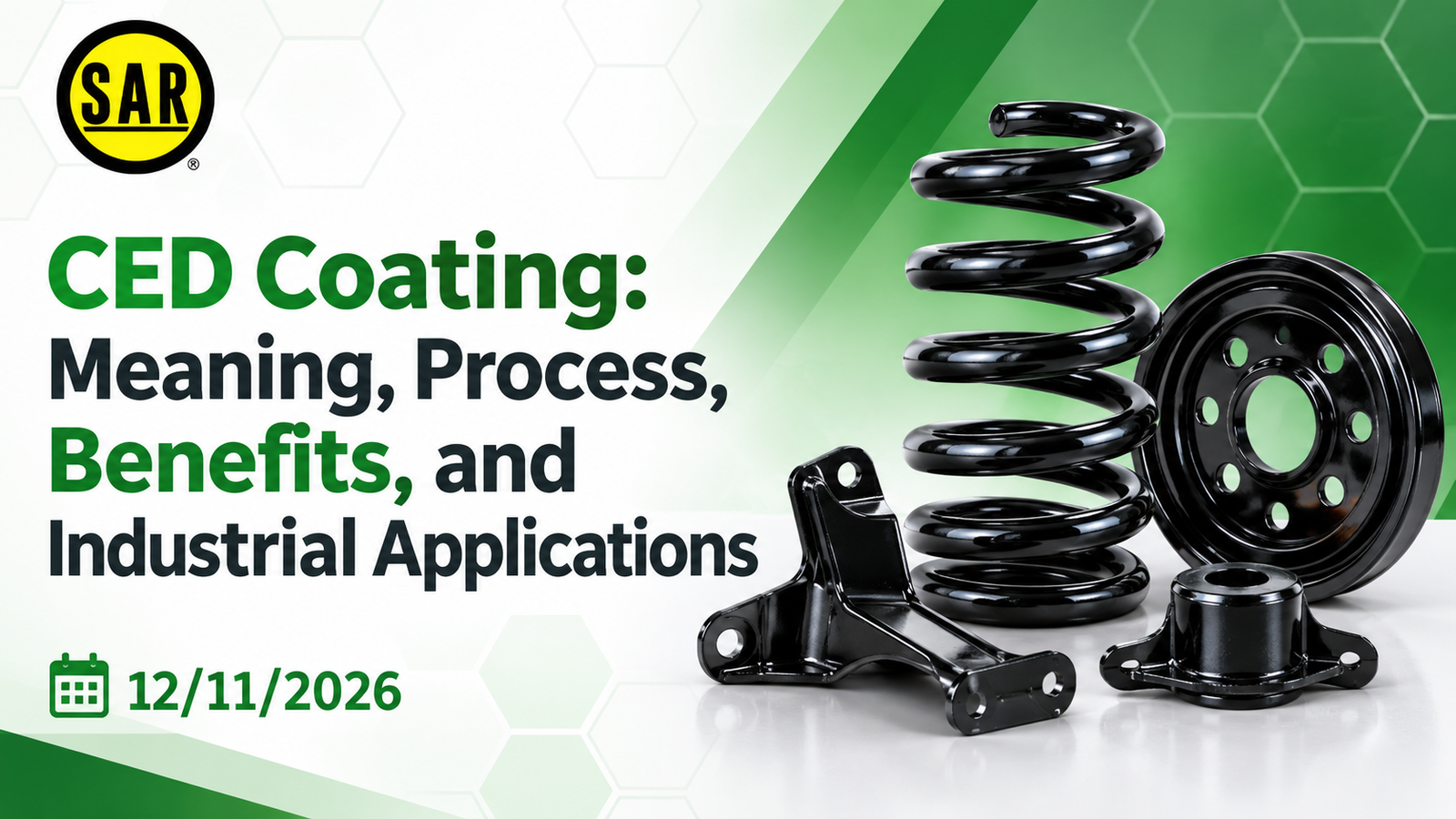
CED Coating: Meaning, Process, Benefits,…
12/11/2026