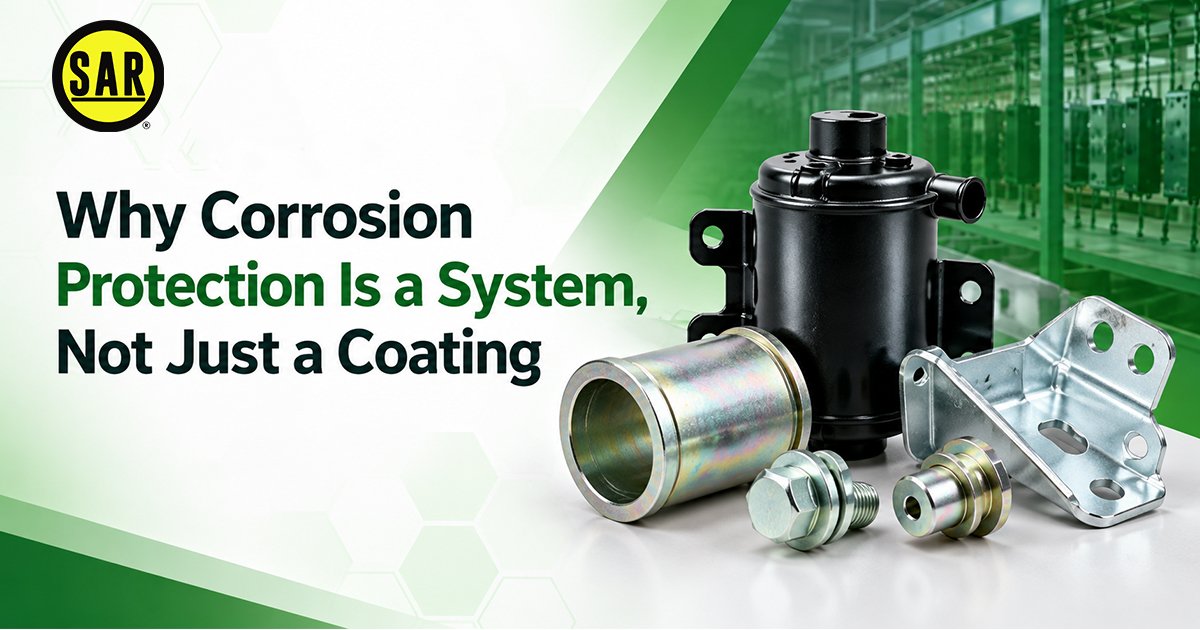
Why Corrosion Protection Is a System, Not Just a Coating
Corrosion is not a problem that happens on the surface. For parts, engineering components, fasteners, brackets and metal assemblies corrosion protection plays a big role in how long a part lasts how it performs and whether it keeps its shape over time.
A coating might look like a layer on the outside but real protection comes from much more than just the coating itself.
Things like surface preparation the type of coating used how thick it is, how well it sticks to the metal what happens after coating, how its dried or baked the shape of the part and the conditions the part sees in life all matter a lot.
So when corrosion protection really counts the coating is one part of a bigger system.
What Does a Corrosion Protection System Mean?
A corrosion protection system is a set of steps and choices that work together to keep a metal part safe from damage by the environment.
Metal parts face lots of conditions during use—moisture, humidity, salt, chemicals, temperature changes, road debris and more. Left unprotected these can slowly eat away at the metal. Make it fail.
That’s why picking a coating should not be treated like choosing a paint color.
Instead the whole process needs to include:
- How clean the surface is before coating
- The kind of coating technology used
- How thick the coating is
- How even the coating is
- How it sticks to the metal
- What happens after coating
- How it’s cured or baked
- The shape of the part
- The conditions it will face
When all these pieces are planned together the result is reliable and consistent protection.
Why Surface Preparation Matters
Before any coating is applied the metal surface must be ready.
Oil, grease, dirt, rust, scale and other junk can stop the coating from sticking. If the surface isn't clean even the best coating can fail early.
Good surface preparation makes sure the coating bonds with the metal. This is extra important in engineering parts, where the coating must work the same way on every part no matter how complex the shape.
Strong corrosion protection starts long before the coating is sprayed or dipped.
The Right Coating Depends on the Application
There is no one coating that works for all parts.
Different jobs need kinds of protection—some for rust resistance some for a good look some for staying thin some for wearing well some for handling chemicals.
Common surface treatments include:
CED / E-Coating
CED or Cathodic Electrodeposition is made to cover metal parts even in hard-to-reach spots like corners, holes and inside cavities.
It uses electricity to pull a coating onto the part through a chemical process.
This makes it ideal for industrial parts that need full coverage and long-term corrosion defense.
Zinc Plating
Zinc plating puts a layer of zinc on steel or iron to protect it.
This layer acts as a barrier. Also sacrifices itself if the surface gets scratched. That means the steel underneath stays safe.
SAR Coatings offers Tri-Valent Zinc Plating in both rack and barrel setups. The choice depends on the part’s size, shape and production needs.
Zinc Nickel Plating
For protection Zinc Nickel plating uses a mix of zinc and nickel that bonds to the metal.
This combination gives corrosion resistance and helps control thickness while keeping the part functional.
It’s widely used in demanding industrial uses where durability and performance both matter.
Zinc Flake Coating
Zinc flake coatings mix zinc and aluminium flakes in a binder. They give protection even at low thicknesses.
These are good when you need protection but can’t use regular plating methods.
Hybrid Coating Systems
Some parts need than one coating step.
Hybrid coatings combine two surface treatments to get performance—like more protection, better durability or better function.
SAR Coatings builds hybrid systems by combining two treatments based on what the part needs.
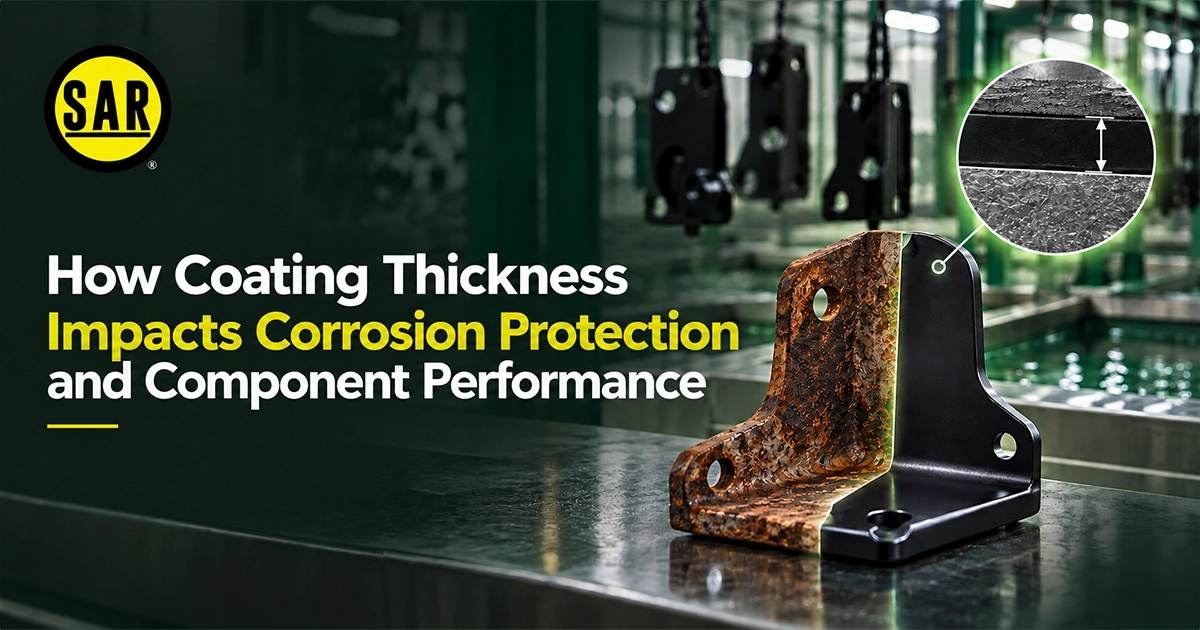
Coating Thickness Is Important.. Thicker Is Not Always Better
People often think a thicker coating means better protection. That’s not always true.
The goal is not to make the coating as thick as possible.
It has to match the part’s:
- Corrosion needs
- Size limits
- Threads and fits
- Shape
- Working environment
- Performance goals
thin and the part could rust. Too thick. It could jam, wear out or not fit properly.
So thickness should be an engineering decision—not a number.
Complex Components Need Consistent Coverage
Today’s automotive and engineering parts are not flat plates.
Brackets, housings, fasteners, chassis parts and others have holes, edges, welds and hidden areas.
A good coating system must protect every spot—not the visible ones.
That’s why the right process matters.
For example CED coating is made to coat shapes evenly. Other plating methods are chosen based on size, shape, volume and performance needs.
Corrosion Protection Is a Process, Not a Single Step
A strong corrosion protection plan starts with knowing the part and how it will be used.
The steps usually include:
- Surface Preparation
- Coating or Plating
- Post-Treatment
- Curing or Drying
- Inspection
- Performance Testing
Each step plays a role. A mistake at any point can ruin the system.
That’s why manufacturers and OEMs can’t pick a coating name. They need to look at the surface-treatment process.
What Should Manufacturers Consider Before Selecting a Coating?
Before choosing a surface treatment manufacturers should ask:
1. Component Material
The material the part is made of affects which coating will work.
2. Component Geometry
Complex shapes, cavities, edges and recesses need coating methods.
3. Corrosion Requirements
The environment and expected protection level decide what system is needed.
4. Dimensional Requirements
Threads, fits, clearances and tolerances must match the coating thickness.
5. Production Volume
The number of parts and their size help pick the process.
6. Application Environment
Underbody parts, engine area, fasteners and industrial tools face different challenges.
7. Quality & Inspection
Coating thickness, adhesion, look and performance should be checked regularly.
The Bottom Line
Corrosion protection isn’t about the coating or the newest technology.
It’s about the system for the right part in the right environment.
Surface prep, coating type, thickness, evenness, post-treatment, curing, inspection and process control all add up to results.
For engineering and industrial parts a well-controlled surface treatment makes a big difference in durability, rust resistance and reliability.
At SAR Coatings we offer surface-treatment options including CED Coating, Zinc Plating, Zinc Nickel Plating, Zinc Flake Coating, Liquid Painting, Powder Coating and Hybrid Coating. These help meet part needs and performance goals.
Because when protection matters it’s not about the coating.
It’s about the system behind it.
Experience the SAR Difference
For corrosion protection surface treatment and coating solutions, for industrial parts contact SAR Coatings LLP.
Latest News
Why Corrosion Protection Is a…
30/09/2026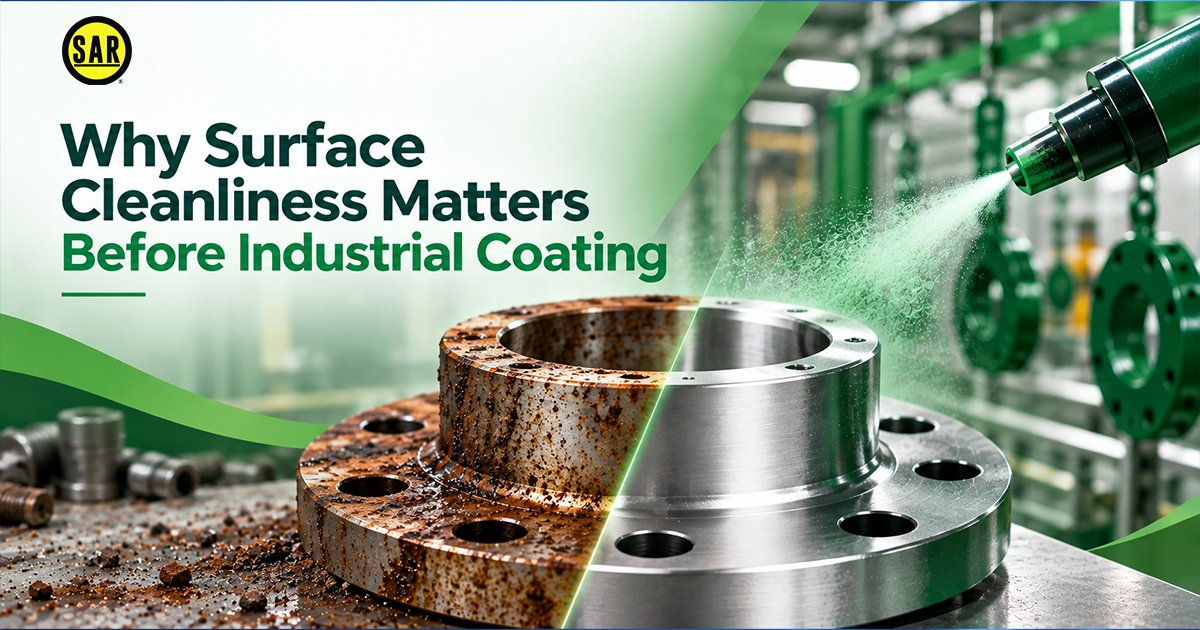
Why Surface Cleanliness Matters Before…
16/09/2026