What Is Salt Spray Test (SST) and Why It Decides Which Coating You Should Choose
When selecting a protective coating for industrial components, automotive parts, fasteners, or metal structures, one of the biggest concerns is:
How long will this coating protect the metal from corrosion?
A coating may look perfect after application, but its true performance is measured when it faces challenging environments such as moisture, salt exposure, chemicals, and outdoor conditions.
This is where the Salt Spray Test (SST) becomes important.
Salt Spray Testing is an accelerated corrosion testing method used to evaluate how effectively a coating protects metal surfaces against corrosion. It helps manufacturers, engineers, and coating specialists understand whether a coating system is suitable for specific operating environments before large-scale application.
For industries where coating failure can lead to expensive maintenance, production downtime, or component failure, SST results provide valuable guidance for selecting the right coating technology.
What Is Salt Spray Test (SST)?
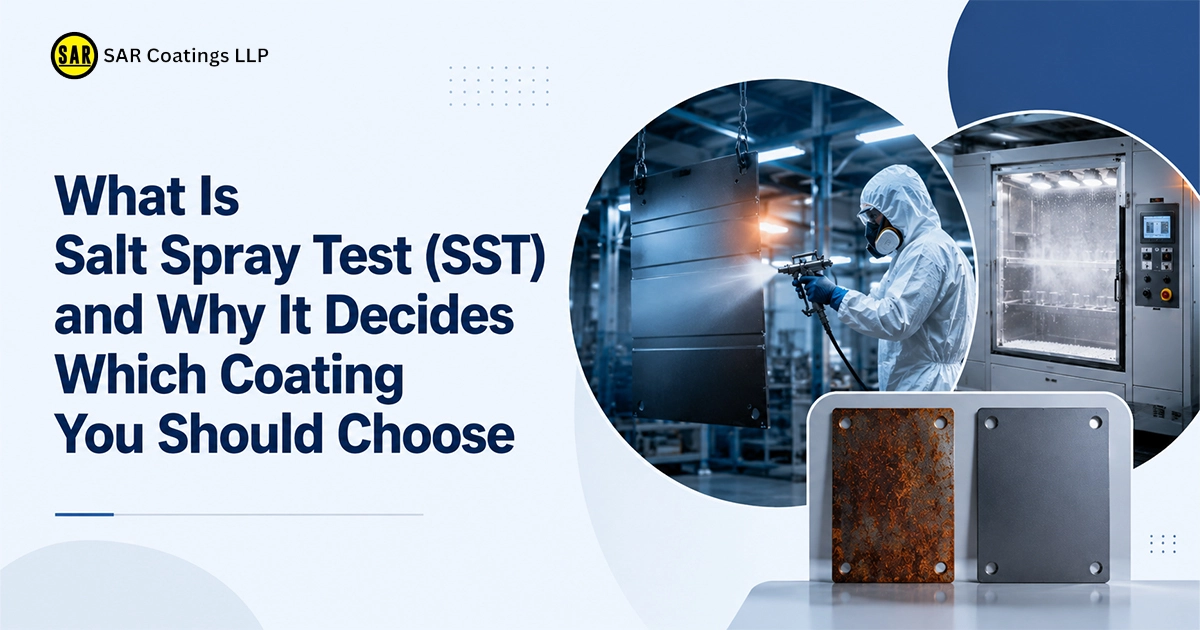
The Salt Spray Test (SST) is a standardized corrosion test used to measure the resistance of protective coatings against a salt-rich environment.
During the test, coated metal samples are placed inside a controlled chamber where they are continuously exposed to a fine mist of salt solution. This accelerated environment increases the corrosion process and allows engineers to evaluate coating performance within a shorter period.
Salt Spray Testing evaluates:
- Corrosion resistance
- Coating durability
- Adhesion performance
- Rust formation
- Surface protection quality
The test results are generally measured in hours of salt spray resistance, such as:
- 96 hours SST
- 240 hours SST
- 500 hours SST
- 1000+ hours SST
A higher SST rating generally indicates better corrosion resistance, but the required rating depends on the actual application and environmental conditions.
Why is Salt Spray Testing Important for Coatings?
Metal corrosion occurs when metals react with moisture, oxygen, and environmental contaminants. In industries such as automotive, construction, marine, and manufacturing, corrosion can reduce product life and increase operational costs.
A protective coating creates a barrier between the metal surface and the surrounding environment. However, every coating system performs differently depending on:
- Coating material
- Application process
- Surface preparation
- Environmental exposure
Two coatings may have a similar appearance but completely different corrosion resistance.
Salt Spray Testing helps answer important questions:
- Will the coating survive harsh environments?
- Is it suitable for outdoor or marine applications?
- Does it meet industry requirements?
- How does it compare with alternative coating systems?
Without proper testing, coating selection becomes a process based on assumptions rather than performance data.
How Does Salt Spray Test Work?
Salt Spray Testing is performed inside a specialized corrosion testing chamber under controlled conditions.
1. Sample Preparation
Before testing, metal samples are prepared and coated according to the required coating process.
The samples are inspected for:
- Coating thickness
- Surface cleanliness
- Coating uniformity
- Adhesion quality
Proper surface preparation is critical because poor preparation can cause premature coating failure.
2. Salt Solution Preparation
A standard salt solution is prepared using sodium chloride (NaCl) and distilled water.
For Neutral Salt Spray (NSS) testing, the commonly used solution contains approximately:
5% sodium chloride solution
This solution is converted into a fine mist inside the test chamber.
3. Exposure Inside Testing Chamber
The coated samples are placed inside the chamber where they are continuously exposed to salt fog.
Testing conditions include:
- Controlled temperature
- Humidity level
- Salt concentration
- pH control
The aggressive environment accelerates corrosion and allows engineers to evaluate coating performance.
4. Inspection and Evaluation
After completing the required testing period, samples are inspected for:
- Red rust formation
- Blistering
- Coating breakdown
- Corrosion spread
- Adhesion failure
The results are recorded according to testing standards.
Salt Spray Testing Standards
Two major standards are commonly followed worldwide for salt spray testing.
ASTM B117 Salt Spray Test
ASTM B117 is one of the most widely recognized standards for salt spray corrosion testing.
It defines:
- Testing chamber requirements
- Salt solution preparation
- Testing conditions
- Evaluation procedures
It is commonly used in automotive, industrial, and manufacturing applications.
ISO 9227 Corrosion Testing Standard
ISO 9227 defines corrosion testing methods using artificial atmospheres.
It includes three major salt spray methods:
- Neutral Salt Spray (NSS)
- Acetic Acid Salt Spray (AASS)
- Copper Accelerated Acetic Acid Salt Spray (CASS)
The selected test method depends on the coating type and application requirements.
Types of Salt Spray Tests
1. Neutral Salt Spray Test (NSS)
Neutral Salt Spray is the most commonly used corrosion test method.
It is suitable for evaluating:
- Powder coatings
- Zinc coatings
- Electroplated surfaces
- Industrial paint systems
NSS provides a general understanding of corrosion resistance.
2. Acetic Acid Salt Spray Test (AASS)
AASS creates a more aggressive acidic environment by adding acetic acid to the salt solution.
It is commonly used for:
- Decorative coatings
- Automotive finishes
- Metal plating applications
3. Copper Accelerated Acetic Acid Salt Spray (CASS)
CASS is a highly accelerated corrosion test where copper salts are added to increase corrosion activity.
It is used for applications requiring higher corrosion protection, such as:
- Automotive components
- Advanced protective coatings
- High-performance finishes
Understanding SST Hours: What Do They Mean?
One common misunderstanding is assuming:
1000 hours SST = 1000 hours of real-world protection
This is incorrect.
Salt Spray Testing is an accelerated laboratory test. SST hours indicate coating performance under controlled corrosive conditions, but they do not directly represent years of service life.
Actual coating performance depends on:
- Climate conditions
- UV exposure
- Temperature variation
- Chemical exposure
- Mechanical damage
- Surface preparation
- Coating thickness
For example, a component used near the ocean may experience corrosion much faster than the same component used in a dry indoor environment.
Therefore, SST hours should be considered a performance benchmark, not a direct lifetime prediction.
How SST Helps Choose the Right Coating
The correct coating selection depends on where and how the component will be used.
Indoor Applications
Requirements usually include:
- Basic corrosion protection
- Good appearance
- Cost efficiency
Standard powder coating systems may provide sufficient protection.
Automotive Applications
Automotive components require coatings with:
- High corrosion resistance
- Chemical resistance
- Durability
- Long service life
Advanced coating systems such as zinc-based or specialized protective coatings are often preferred.
Marine and Coastal Environments
Marine environments expose metals to:
- Salt water
- High humidity
- Continuous moisture
These applications require coatings specifically designed for extreme corrosion resistance.
Salt Spray Performance of Different Coating Systems
Powder Coating
Powder coating is widely used because of its durability, finish quality, and environmental benefits.
Its SST performance depends on:
- Proper pretreatment
- Coating thickness
- Curing process
- Surface preparation
Applications include:
- Industrial equipment
- Electrical panels
- Automotive parts
- Architectural products
Zinc-Based Coatings
Zinc coatings provide corrosion protection through sacrificial protection.
Common zinc coating methods include:
- Zinc plating
- Zinc flake coating
- Hot dip galvanizing
They are commonly used for:
- Fasteners
- Automotive components
- Outdoor structures
Zinc Flake Coatings
Zinc flake coatings are designed for high corrosion resistance with relatively thin coating thickness.
Benefits include:
- Excellent corrosion protection
- Chemical resistance
- Reduced hydrogen embrittlement risk
Applications include:
- Automotive fasteners
- Brake components
- Engine parts
Why Surface Preparation Is Critical
Coating performance depends heavily on surface preparation.
Proper preparation improves:
- Adhesion
- Corrosion resistance
- Coating life
- SST performance
Common preparation methods include:
Degreasing
Removes:
- Oil
- Grease
- Manufacturing contaminants
Abrasive Blasting
Creates a surface profile for better coating bonding.
Chemical Pretreatment
Improves corrosion resistance using treatments such as:
- Zinc phosphate
- Zirconium-based coatings
Even the best coating technology can fail if the substrate preparation is poor.
Limitations of Salt Spray Testing
Although SST is an important evaluation method, it does have limitations.
Salt Spray Testing does not fully replicate real environments, which include:
- Rain cycles
- UV exposure
- Temperature changes
- Mechanical wear
- Industrial pollution
Also, a higher SST rating does not always mean a coating is better for every application.
A coating selected for marine corrosion resistance may not provide the required:
- Wear resistance
- Temperature resistance
- Chemical performance
The coating must match the complete application requirement.
How to Select the Right Coating?
Before selecting a coating system, consider:
1. Operating Environment
Where will the component be used?
- Indoor
- Outdoor
- Marine
- Industrial
2. Required Corrosion Protection
Determine whether the application requires:
- Basic protection
- Medium resistance
- Extreme corrosion resistance
3. Additional Performance Requirements
Consider:
- Wear resistance
- Chemical resistance
- Temperature resistance
- Appearance
- Friction properties
4. Testing Standards
Always compare coating systems based on recognized standards such as:
- ASTM B117
- ISO 9227
Conclusion
Salt Spray Testing plays an important role in selecting the right protective coating by providing measurable information about corrosion resistance and durability.
However, coating selection should not depend only on SST hours. The best coating solution considers:
- Application environment
- Metal substrate
- Surface preparation
- Performance requirements
- Industry standards
At SAR Coatings, we help industries select coating solutions designed for durability, corrosion protection, and long-term performance.
The right coating is not only about appearance - it is about protection that performs when it matters most.
Latest News
Why Corrosion Protection Is a…
30/09/2026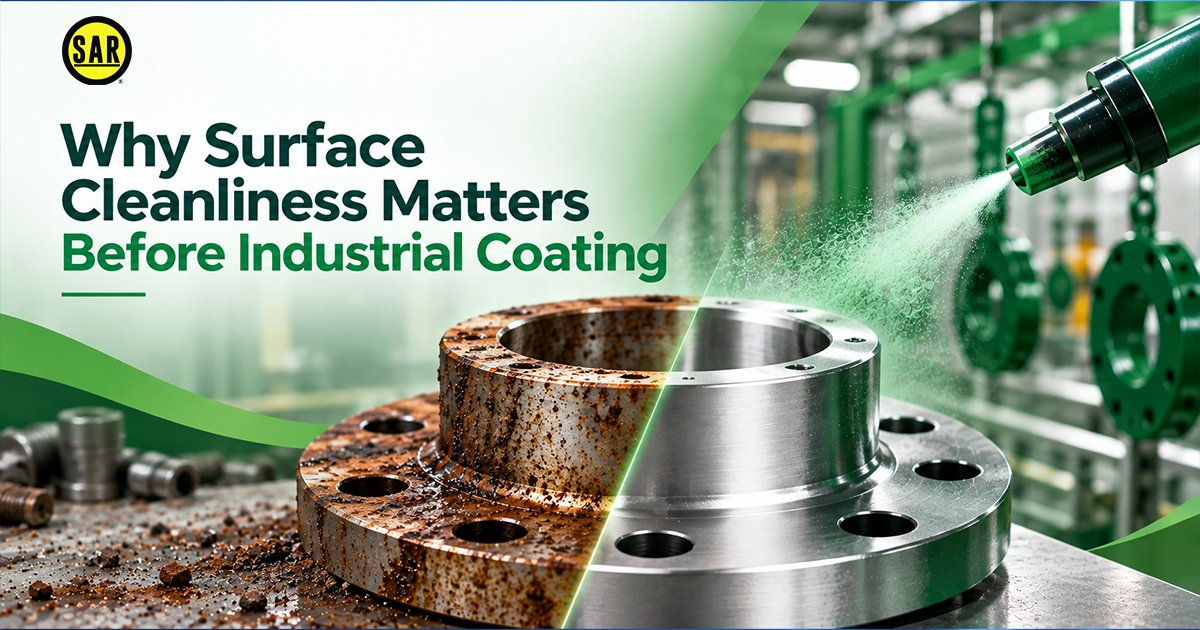
Why Surface Cleanliness Matters Before…
16/09/2026