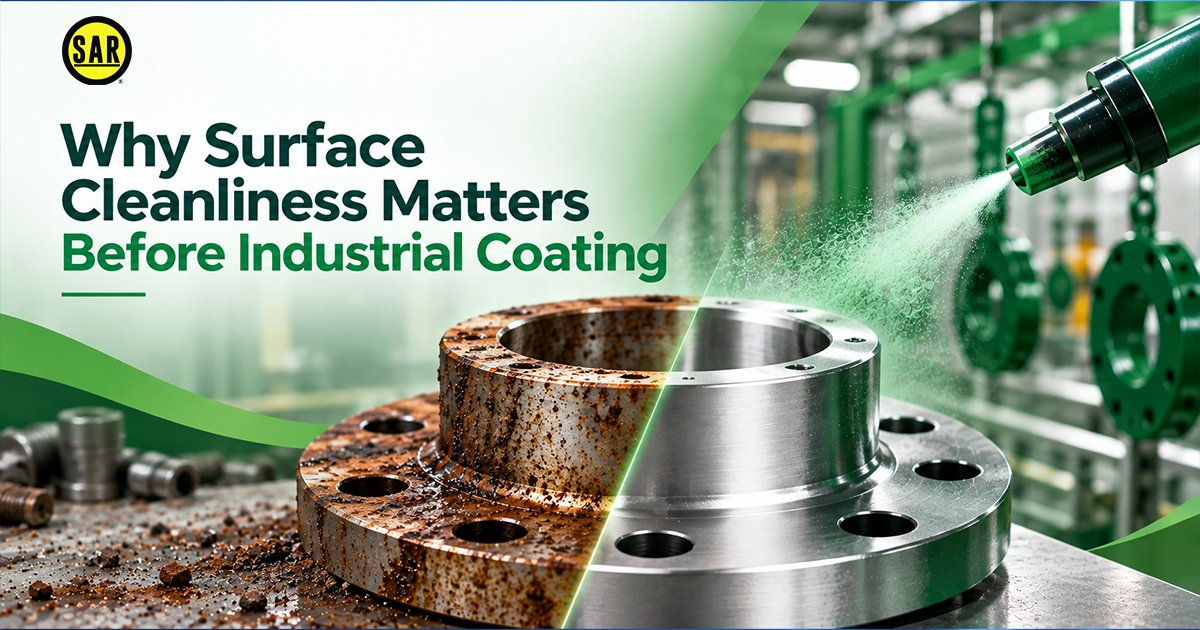
Why Surface Cleanliness Matters Before Industrial Coating
When it comes to industrial coating, most manufacturers focus on the coating material, thickness, finish, and corrosion resistance. But there is one step that often gets less attention, even though it can have a big impact on the final result: surface cleanliness.
Before applying any industrial coating, the metal surface needs to be properly cleaned and prepared. Oil, grease, dust, rust, moisture, salts, and other contaminants can remain on the component during manufacturing or handling. If these are not removed properly, the coating may not bond with the surface as it should.
This can lead to problems like peeling, blistering, poor adhesion, uneven finish, and corrosion under the coating. In some cases, the coating may look fine when the component leaves the production line. Still, the problem becomes visible after the component is exposed to moisture, chemicals, or other operating conditions.
For automotive and industrial manufacturers, surface preparation is more than a cleaning step. It is an important part of the complete coating process.
In this blog, we will understand why surface cleanliness matters before industrial coating, what contaminants are commonly found on metal surfaces, different cleaning methods, and how proper preparation can improve the overall coating performance.
What Is Surface Cleanliness in Industrial Coating?
Surface cleanliness means the condition of the component surface before coating or surface treatment is carried out.
The basic purpose is simple: remove anything from the surface that can affect the coating process or its performance.
Depending on the manufacturing process and component, the surface may contain:
- Oil and grease
- Dust and dirt
- Rust
- Oxides
- Mill scale
- Welding residues
- Salts
- Moisture
- Fingerprints
- Previous coating residues
- Other chemical contamination
Not every component will have the same type or level of contamination. This is why the cleaning and pretreatment process should be selected according to the material, component design, and coating requirement.
A clean surface gives the coating a much better base to work with.
Why Surface Cleanliness Matters Before Industrial Coating
1. Better Coating Adhesion
One of the biggest reasons for proper surface cleaning is coating adhesion.
For a coating to perform properly, it needs to make good contact with the substrate. When oil, grease, dust, or other contaminants are present, they can come between the metal and coating.
This can result in weak bonding.
Over time, the coating may start to:
- Peel from the surface
- Flake
- Crack
- Lift
- Develop local areas of failure
Proper cleaning removes these unwanted materials and helps the coating bond more effectively with the substrate.
This becomes even more important when components are going to be used in automotive, machinery, construction, or other demanding applications.
2. Helps in Corrosion Protection
Industrial coatings are often applied mainly to protect metal components from corrosion.
But if the surface contains moisture, salts, rust, or other contaminants before coating, the coating system may not provide the expected level of protection.
For example, soluble salts can attract moisture. If they remain trapped between the metal and coating, they can contribute to corrosion beneath the coating.
A properly cleaned and prepared surface helps reduce these risks and gives the protective coating a better foundation.
This is particularly important for components exposed to:
- High humidity
- Water
- Chemicals
- Outdoor conditions
- Road salt
- Industrial environments
3. Improves Overall Coating Performance
Coating performance does not depend on one thing only.
The final result can be affected by:
- Surface preparation
- Coating material
- Application method
- Coating thickness
- Curing conditions
- Component material
- Operating environment
Even if the coating material is high quality, poor surface preparation can reduce its performance.
When the surface is properly cleaned and prepared, the coating has a better chance of achieving the required adhesion, coverage, and protection.
4. Reduces Common Coating Defects
Many coating problems can be linked with incorrect or insufficient surface preparation.
Depending on the type of contamination and coating process, manufacturers may see defects such as:
- Blistering
- Pinholes
- Fish eyes
- Craters
- Peeling
- Uneven coating
- Poor adhesion
- Rough surface
- Discoloration
Not every defect is caused by surface contamination, but controlling the surface condition before coating can remove one of the important causes of coating failure.
For high-volume manufacturing, reducing even a small percentage of coating defects can make a noticeable difference in production efficiency.
5. Can Increase Coating Service Life
The purpose of an industrial coating is not only to make a component look better. It also needs to continue protecting the substrate during its expected service life.
If the coating has poor adhesion from the beginning, it can start deteriorating much earlier.
Proper surface preparation supports better bonding and consistent coating performance. This can help the coating remain effective for longer, depending on the coating system and operating environment.
So, surface cleanliness should be looked at as an investment in the complete coating process.
Common Contaminants Found on Metal Surfaces
Metal components can pick up contamination at different stages of manufacturing, transportation, and handling.
Oil and Grease
Oil and grease are very common on components after machining, stamping, forming, and other manufacturing operations.
Even a small amount of oil can affect coating adhesion.
That is why suitable degreasing or cleaning is normally required before the next coating or surface treatment stage.
Dust and Dirt
Dust can come from the production environment, storage area, transportation, or manual handling.
If dust remains on the surface, it can become trapped in the coating film. This can affect both the appearance and consistency of the finished component.
Rust and Oxides
Metal surfaces can develop rust and oxide layers when exposed to oxygen and moisture.
Depending on the coating process, these materials may need to be removed or treated before coating.
Coating over loose rust or poorly bonded surface material can create adhesion and durability issues.
Mill Scale
Mill scale is an oxide layer that commonly forms on steel during high-temperature manufacturing processes.
It can have different characteristics from the underlying metal and, when not suitable for the selected coating process, may contribute to adhesion problems.
The required treatment depends on the component and coating specification.
Salts and Chemical Residues
Chemical residues and soluble salts are another concern for industrial coating.
These contaminants can remain on a surface even when the component looks visually clean.
If they are not properly controlled, they may attract moisture and contribute to corrosion under the coating.
This is one reason why visual inspection alone is not always enough for critical applications.
Common Surface Cleaning and Preparation Methods
There is no single cleaning method that works for every industrial component.
The right process depends on the substrate, contamination, component geometry, coating technology, and required performance.
Degreasing
Degreasing is mainly used for removing oil, grease, and similar contaminants.
It can be carried out using suitable chemical cleaners or industrial cleaning equipment.
The cleaning method needs to be selected according to the metal and the next process in the production line.
Alkaline Cleaning
Alkaline cleaning is commonly used for removing oils, grease, and other organic contamination from metal surfaces.
The effectiveness depends on factors such as cleaner concentration, temperature, contact time, and process control.
These parameters need to be maintained properly for consistent results.
Solvent Cleaning
Solvent cleaning can be used for removing certain oils and grease from metal components.
It may be useful in specific applications, but the solvent should always be suitable for the substrate and the following coating process.
Mechanical Cleaning
Mechanical cleaning methods can help remove rust, scale, old coatings, and other unwanted materials.
Depending on the requirement, this may include:
- Grinding
- Wire brushing
- Abrasive blasting
- Other mechanical preparation methods
The selected method should provide the required surface condition without damaging the component.
Abrasive Blasting
Abrasive blasting is widely used in industrial surface preparation.
It can remove rust, scale, old coatings, and other surface materials while also creating a suitable surface profile for certain coating systems.
The blasting media, pressure, and process parameters should be controlled based on the substrate and coating requirements.
Chemical Pretreatment
Some industrial coating processes require chemical pretreatment before the final coating.
Pretreatment can clean, activate, or condition the metal surface so that it is more suitable for the coating process.
The exact pretreatment sequence varies depending on the substrate and coating technology.
Surface Cleanliness and Different Industrial Coating Processes
Different coating technologies have different surface preparation requirements. The same cleaning approach may not be suitable for every process.
Powder Coating
Before powder coating, metal components generally require proper cleaning and pretreatment.
Any remaining oil, grease, dust, or other contamination can affect coating adhesion and finish quality.
A controlled pretreatment process helps prepare the surface before powder application.
Liquid Painting
Liquid painting also requires a properly prepared substrate.
Contaminants like oil, grease, moisture, and dust can interfere with the coating application and may create defects after drying or curing.
The preparation requirements will depend on the paint system and application conditions.
CED Coating
CED, or Cathodic Electro Deposition, is another process where pretreatment plays an important role.
Before electrocoating, the metal surface needs to go through the required cleaning and pretreatment stages.
A properly prepared surface supports consistent coating deposition, adhesion, and corrosion protection.
This is particularly relevant for automotive and industrial components where consistent coverage and corrosion resistance are important.
Plating
Surface preparation is also very important in plating.
Before the plating process starts, the substrate needs to be sufficiently clean so that the plating material can deposit properly on the surface.
Contamination can affect plating adhesion, appearance, deposition quality, and corrosion performance.
What Happens When Surface Preparation Is Poor?
Poor surface preparation can create problems that are not always visible immediately.
A component may pass a basic visual inspection but later develop coating failure during testing or actual use.
Some common consequences include:
- Coating peeling
- Blister formation
- Corrosion
- Component rejection
- Rework
- Recoating
- Production delays
- Increased material usage
- Customer complaints
- Reduced product life
For manufacturers producing thousands or even millions of components, these issues can become expensive very quickly.
This is why surface preparation should be controlled as part of the production process.
Factors That Affect Surface Cleanliness
The cleaning process should be selected based on the actual component and application.
1. Type of Metal
Steel, stainless steel, aluminium and other metals can have different cleaning and pretreatment requirements.
A process suitable for one substrate may not give the same result on another.
2. Type of Contamination
Oil and grease require a different approach compared with rust, mill scale, dust, or chemical residues.
Identifying the contamination first makes it easier to select an appropriate cleaning method.
3. Component Shape
Component geometry also matters.
Parts with holes, threads, recesses, corners, or complicated shapes can be more difficult to clean properly.
These areas should receive appropriate attention during surface preparation.
4. Coating Technology
Powder coating, liquid painting, CED coating, and plating all have their own process requirements.
The cleaning and pretreatment process should be compatible with the coating system.
5. End-Use Environment
A component used indoors may have different requirements compared with a component exposed to water, humidity, chemicals, road salt, or outdoor conditions.
The expected operating environment should therefore be considered when deciding the preparation process.
How Manufacturers Can Maintain Consistent Surface Preparation
Cleaning a component once is not enough. Manufacturers need consistency across the complete production batch.
Some useful practices include:
- Identify the type of contamination before selecting the cleaning process.
- Follow a defined cleaning and pretreatment procedure.
- Maintain important process parameters such as temperature, concentration and treatment time.
- Avoid unnecessary handling after cleaning.
- Prevent cleaned parts from coming into contact with oil, dust or other contaminants.
- Keep components dry before coating where required.
- Inspect the prepared surface before starting the coating process.
- Monitor the cleaning and pretreatment process regularly.
- Maintain records for important quality-control parameters.
- Review the process if coating defects or adhesion problems start increasing.
These steps may look simple, but they can help maintain better consistency in a high-volume industrial coating operation.
Surface Cleaning vs Surface Preparation
Surface cleaning and surface preparation are often used as the same term, but they are not always the same.
Cleaning mainly focuses on removing contaminants such as:
- Oil
- Grease
- Dust
- Dirt
- Chemical residues
Surface preparation can include additional processes such as:
- Rust removal
- Scale removal
- Abrasive blasting
- Surface profiling
- Chemical pretreatment
- Activation
The complete preparation process depends on what coating will be applied and what performance is expected from the finished component.
So, simply making a metal surface look clean does not always mean it is ready for coating.
What Should Be Checked Before Industrial Coating?
Before coating, manufacturers should check the condition of the prepared surface.
Some basic questions include:
- Is the surface free from visible oil and grease?
- Has dust and loose contamination been removed?
- Is there any rust or scale remaining?
- Is the component properly dry?
- Are chemical or salt residues controlled?
- Has the required pretreatment been completed?
- Has the component been protected from recontamination?
- Is the surface suitable for the selected coating process?
For critical industrial applications, inspection should follow the applicable coating specification, quality requirements and relevant industry standards.
Why Surface Cleanliness Is Important for Industrial Coating Quality
Industrial coating quality is not decided only after the coating has been applied.
The preparation before coating plays a major role in the outcome.
A properly cleaned and prepared surface can help manufacturers achieve:
- Better coating adhesion
- More consistent finish
- Improved corrosion protection
- Lower coating defect rates
- Reduced rework
- Better production consistency
- Longer-lasting coating performance
This is especially important for automotive and industrial components where the coating needs to perform under demanding conditions.
Choosing the Right Surface Treatment and Coating Process
Every component has different requirements. The right surface preparation and coating process depends on the material, component geometry, required appearance, corrosion protection level, and final application.
For this reason, manufacturers should not select a coating process only by looking at the coating material. The complete process, starting from cleaning and pretreatment, should be considered.
Whether the requirement is CED coating, powder coating, liquid spray painting, zinc plating, or another industrial surface treatment, proper preparation is an important part of achieving consistent results.
Why Choose SAR Coatings for Industrial Surface Treatment?
At SAR Coatings, surface preparation and coating are approached as part of one complete finishing process.
For manufacturers, getting a consistent coating result means more than simply applying a coating on the component. The condition of the substrate, pretreatment, application process, and quality checks all need to work together.
SAR Coatings provides industrial coating and surface treatment solutions for manufacturers across different component and application requirements. Our capabilities include CED coating, powder coating, liquid spray painting, zinc plating, and other industrial finishing solutions.
The right process can be selected based on factors such as the component material, geometry, required finish, corrosion protection requirements, and end-use environment.
If you are looking for an industrial coating and surface treatment partner for your components, you can discuss your specific requirements with SAR Coatings. Our team can help you understand the suitable preparation and coating approach for your application and production needs.
Latest News
Why Surface Cleanliness Matters Before…
16/09/2026
How Coating Thickness Impacts Corrosion…
07/09/2026