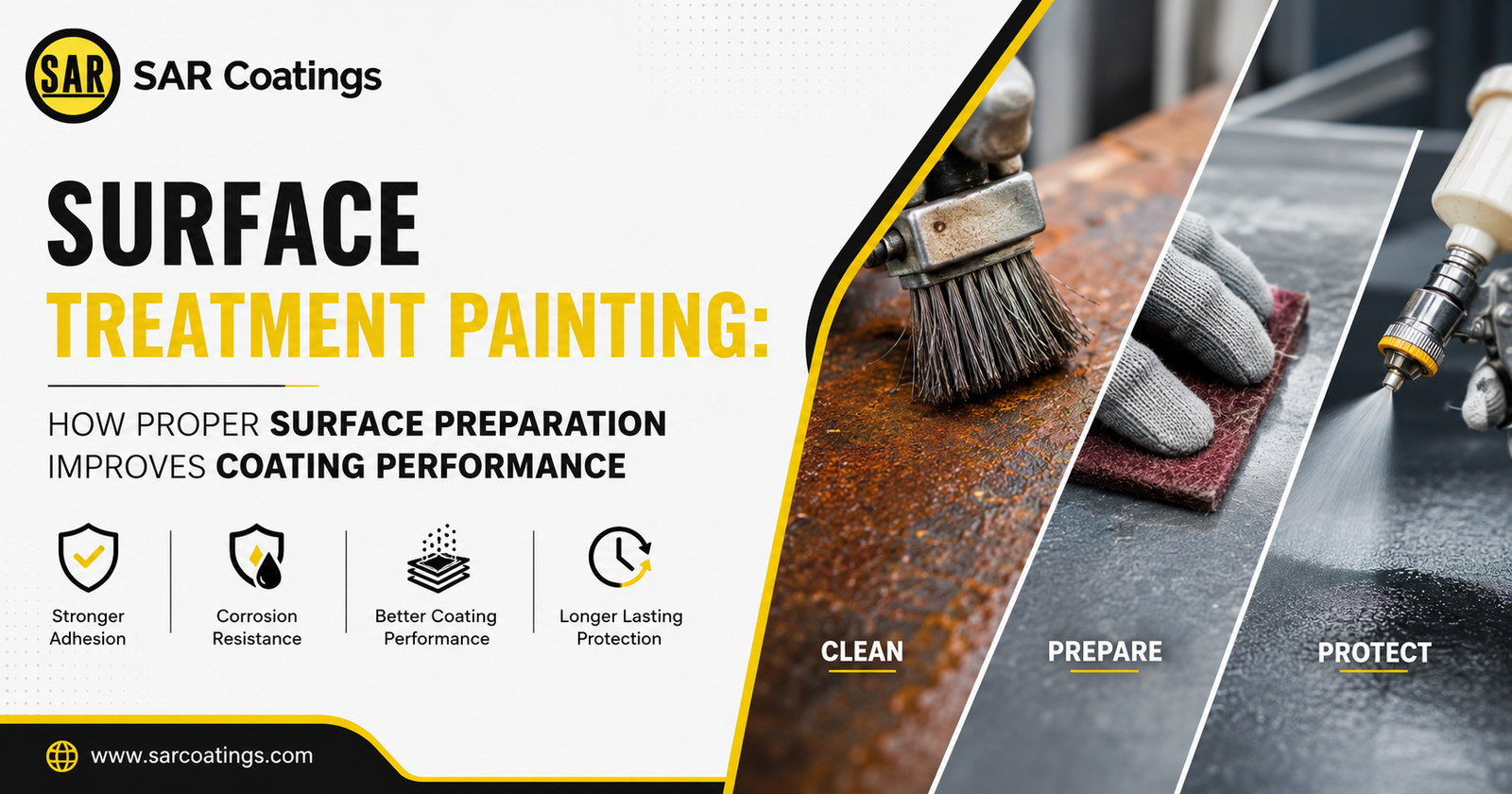
Surface Treatment Painting: How Proper Surface Preparation Improves Coating Performance
A high-quality paint or protective coating can only perform as well as the surface underneath it.
In industrial painting, surface treatment is often the step that determines whether a coating system lasts for years or begins showing defects much earlier than expected. Rust, oil, grease, dust, mill scale, old coatings, moisture, soluble salts, and other contaminants can interfere with coating adhesion and create conditions for premature failure.
This is why surface treatment painting is not simply about applying paint to a metal or other substrate. It starts with preparing the surface so that the coating can properly bond, cure, and provide the required protection.
Industry standards such as ISO 8501-1 provide visual classifications for rust grades and surface preparation grades on steel, while AMPP maintains standards covering cleaning methods, surface cleanliness, contaminants, and surface profile.
In this guide, we will explain why surface preparation matters, the major preparation methods, common mistakes, and how proper preparation improves overall coating performance.
What Is Surface Treatment Painting?
Surface treatment painting is the process of preparing a substrate and applying a suitable coating or paint system to improve its appearance, durability, corrosion resistance, chemical resistance, or other performance characteristics.
The process generally involves several stages:
- Inspecting the substrate
- Removing contaminants
- Removing rust, mill scale, or defective coatings
- Creating the required surface profile
- Removing dust and remaining residues
- Checking surface conditions
- Applying the appropriate primer or coating
- Allowing the coating to cure under suitable conditions
- Inspecting the finished coating
The exact process depends on the substrate, coating system, operating environment, and required service life.
For example, a steel structure exposed to a humid or corrosive industrial environment may require substantially more rigorous preparation than a component used in a relatively mild indoor environment.
Why Is Surface Preparation Important Before Painting?
Surface preparation is one of the most important stages of an industrial coating project because the coating needs a clean and suitable substrate to develop proper adhesion.
AMPP notes that its surface-preparation standards are designed to help improve adhesion and coating or lining performance.
Proper preparation can help:
- Improve coating adhesion
- Reduce premature peeling and flaking
- Improve corrosion protection
- Increase coating durability
- Reduce blistering and underfilm corrosion
- Improve coating uniformity
- Extend maintenance intervals
- Increase the service life of the coating system
In contrast, painting over contamination or unstable rust can trap defects beneath the coating. The coating may initially look acceptable, but failures can develop later as moisture and corrosive agents reach weak areas.
Sherwin-Williams similarly identifies surface preparation as a key factor affecting coating performance and service life.
Common Contaminants That Affect Coating Performance
Before selecting a surface treatment method, the condition of the substrate should be carefully assessed.
Common contaminants include:
1. Oil and Grease
Oil and grease can form a barrier between the substrate and coating.
Even if the surface appears visually clean, oily contamination may prevent proper adhesion. Solvent or detergent-based cleaning may therefore be required before mechanical or abrasive preparation.
2. Rust
Rust is one of the most common problems when preparing steel surfaces for painting.
If loose or unstable corrosion remains underneath the coating, the coating system may fail as corrosion continues to develop beneath it.
3. Mill Scale
Mill scale is a hard oxide layer that can form on steel during manufacturing.
Depending on the coating system and specification, mill scale may need to be removed because coating adhesion to the underlying steel can be compromised when the scale is unstable.
4. Dust
Dust generated during grinding, blasting, or other preparation processes can remain on the surface.
If not removed, it can become trapped beneath the coating, creating weak points or surface defects.
5. Soluble Salts
Soluble salts can be particularly problematic in environments where corrosion protection is critical.
These contaminants may not always be visible, which is why appropriate inspection and testing can be important before coating application. AMPP's surface-preparation standards include testing for non-visible contaminants such as soluble salts.
6. Existing Paint or Coatings
Previously coated surfaces need to be evaluated before repainting.
Loose, peeling, cracked, or poorly bonded coatings may need to be removed rather than covered with a new layer.
Major Surface Preparation Methods
There is no single surface treatment method that works for every application. The correct method depends on the substrate condition, coating specification, environment, and required level of cleanliness.
Solvent Cleaning
Solvent cleaning is generally used to remove oil, grease, and other soluble contaminants.
It is often used as an initial cleaning step before additional mechanical or abrasive surface preparation.
However, solvent cleaning alone may not be sufficient when rust, mill scale, or firmly adhered coatings need to be removed.
Hand Tool Cleaning
Hand tools such as scrapers, wire brushes, and other manual tools can be used to remove loose rust, paint, and contaminants.
This approach can be useful for localized repairs or areas where more aggressive preparation is not practical.
Power Tool Cleaning
Power tools can provide a more efficient alternative to manual cleaning.
Grinding, power brushing, and other mechanical methods can be used to remove loose corrosion and defective coatings.
The final surface should still be checked against the required coating specification.
Abrasive Blast Cleaning
Abrasive blasting is widely used for industrial steel surface preparation.
It can remove rust, mill scale, old coatings, and other contaminants while creating a surface profile that can support coating adhesion.
ISO 8504-2 describes abrasive blast-cleaning methods for preparing steel surfaces before coating and addresses equipment, procedures, effectiveness, and fields of application.
Depending on the specification, different levels of blast cleaning may be required.
Waterjet Cleaning
High-pressure or ultra-high-pressure waterjetting can be used to remove contaminants, corrosion products, and existing coatings.
AMPP recognizes waterjet cleaning as one of the standardized surface-preparation approaches for metal surfaces.
One important consideration is controlling moisture and preventing flash rust where applicable before coating.
What Is Surface Profile and Why Does It Matter?
Surface profile refers to the microscopic roughness created on a substrate during certain preparation processes, particularly abrasive blasting.
Think of it as a controlled texture on the surface.
A suitable profile can provide the coating with additional mechanical interaction with the substrate. However, the profile must be appropriate for the coating system.
If the profile is too shallow, the coating may not achieve the required adhesion.
If it is excessively deep, the coating may not adequately cover the peaks, potentially affecting protection and coating consumption.
Therefore, surface profile should be controlled according to the coating manufacturer's requirements and project specification.
AMPP specifically identifies evaluation of surface profile-including profile depth and density-as part of its surface-preparation standards work.
Surface Cleanliness vs Surface Profile
These two concepts are related but not the same.
Surface cleanliness refers to the removal of contaminants such as:
- Rust
- Oil
- Grease
- Dust
- Mill scale
- Existing loose coatings
- Soluble salts and other contaminants
Surface profile refers to the texture or roughness created on the substrate.
A surface can be visually clean but still have an unsuitable profile. Similarly, a surface can have a good profile but remain contaminated.
Effective surface treatment therefore requires attention to both.
How Proper Surface Preparation Improves Coating Performance
Better Adhesion
The first major benefit is improved adhesion.
A coating needs to remain securely attached to the substrate throughout its service life. Contamination, loose corrosion, or unsuitable surface conditions can interfere with that bond.
Proper surface preparation creates a more suitable foundation for the coating system.
Improved Corrosion Resistance
For steel structures, corrosion protection is often the primary reason for applying an industrial coating.
If contaminants or unstable corrosion remain beneath the coating, corrosion can continue and eventually compromise the coating system.
Proper preparation helps establish a cleaner and more stable substrate before the protective coating is applied.
Longer Coating Service Life
A coating system that adheres properly and is applied over a correctly prepared surface is more likely to deliver its intended service life.
This can reduce the frequency of repainting and maintenance, particularly on difficult-to-access industrial structures.
Reduced Peeling and Flaking
Poor adhesion is a common contributor to peeling and flaking.
Surface preparation helps eliminate weak layers between the substrate and coating, reducing the risk of premature coating detachment.
Better Appearance
Surface preparation is not only about protection.
Removing old coatings, corrosion, and contaminants can also help produce a more consistent final finish.
A properly prepared substrate can result in better coating uniformity and appearance.
Surface Preparation for Different Substrates
The preparation method should always be selected according to the substrate.
Steel
Steel commonly requires removal of rust, mill scale, oil, grease, dust, and other contaminants.
Depending on the project requirements, preparation may involve solvent cleaning, mechanical cleaning, abrasive blasting, or waterjetting.
ISO 8501-1 provides visual assessment methods for rust grades and preparation grades of steel surfaces.
Galvanized Metal
Galvanized surfaces require care because aggressive preparation can damage the zinc layer.
Cleaning and surface treatment should therefore be compatible with the galvanizing and the selected coating system.
Aluminum
Aluminum surfaces can develop oxide layers and may require specialized preparation to achieve reliable coating adhesion.
The preparation method should be selected based on the coating manufacturer's technical requirements.
Concrete
Concrete requires a different approach from steel.
Surface preparation may involve removing laitance, weak material, dirt, oil, old coatings, and other contaminants while ensuring that the substrate meets the requirements of the coating system.
AMPP has developed and continues to develop standards and guidance covering different concrete surface-preparation methods.
Common Surface Preparation Mistakes
Even a high-quality coating can fail when preparation is rushed or performed incorrectly.
Painting Over Rust
Applying paint directly over unstable rust can trap corrosion beneath the coating.
Ignoring Oil and Grease
A surface can look clean while still carrying invisible or difficult-to-detect contamination.
Skipping Dust Removal
Dust generated during grinding or blasting should be properly removed before coating.
Using the Wrong Preparation Method
Not every substrate can tolerate aggressive blasting or mechanical cleaning.
The method should match the substrate and coating specification.
Ignoring Environmental Conditions
Temperature, humidity, condensation, and substrate temperature can affect coating application and curing.
Applying Coating Too Late After Preparation
Once a surface has been prepared, it should be protected from recontamination and environmental exposure before coating.
The acceptable time between preparation and coating depends on the environment, substrate, coating system, and project specification.
A Practical Surface Preparation Checklist
Before applying an industrial coating, consider the following checklist:
Step 1: Inspect the substrate
Identify rust, old coatings, oil, grease, dust, mill scale, damage, and other defects.
Step 2: Select the preparation method
Choose solvent cleaning, mechanical cleaning, abrasive blasting, waterjetting, or another suitable method based on the specification.
Step 3: Remove contaminants
Ensure visible and relevant non-visible contaminants are addressed.
Step 4: Achieve the required cleanliness
Verify that the prepared surface meets the specified cleanliness level.
Step 5: Check surface profile
Where applicable, measure and confirm that the profile is suitable for the coating system.
Step 6: Remove preparation residues
Remove dust and other remaining particles before coating.
Step 7: Check environmental conditions
Confirm that temperature, humidity, substrate temperature, and condensation conditions are suitable.
Step 8: Apply the coating
Apply the primer and subsequent coating layers according to the manufacturer's technical data and project specification.
Step 9: Inspect the finished coating
Check coverage, thickness, appearance, adhesion where required, and other specified quality parameters.
Surface Treatment Standards: Why They Matter
Industrial coating projects should not rely only on visual judgment.
Standards provide a common framework for specifying and evaluating surface preparation.
For steel substrates, ISO 8501-1 defines rust and preparation grades using written descriptions and representative photographic examples.
AMPP also maintains surface-preparation standards covering methods such as solvent cleaning, power-tool cleaning, abrasive blasting, waterjetting, surface cleanliness, and surface-profile evaluation.
Following the applicable specification helps contractors, inspectors, coating manufacturers, and asset owners work toward the same expected result.
How to Choose the Right Surface Treatment for Painting
The correct preparation method depends on several factors:
- Type of substrate
- Existing surface condition
- Type of contamination
- Existing coating condition
- Selected coating system
- Operating environment
- Expected service life
- Accessibility of the surface
- Project specification
- Applicable industry standards
- Cost and available equipment
For example, a heavily corroded steel structure intended for long-term exposure to a harsh industrial environment may require a significantly higher level of preparation than a lightly contaminated component in a controlled indoor environment.
There is no universal "best" surface preparation method. The best method is the one that achieves the required substrate condition without unnecessarily damaging the substrate or compromising the coating system.
Why Surface Preparation Should Not Be Treated as a Cost-Cutting Area
Surface preparation can represent a significant part of an industrial painting project, which sometimes leads companies to look for shortcuts.
But reducing preparation quality can increase the risk of:
- Early coating failure
- Corrosion
- Rework
- Additional labor
- Production downtime
- More frequent maintenance
- Higher long-term costs
A properly prepared surface may require more effort at the beginning, but it can help the coating system perform as intended over a longer period.
Final Thoughts
Surface treatment painting starts long before the first coat of paint is applied.
The quality of surface preparation directly influences coating adhesion, corrosion protection, durability, appearance, and service life. Removing contaminants, achieving the required cleanliness, establishing the correct surface profile, and controlling application conditions are all important parts of a successful coating process.
For industrial assets where coating failure can lead to corrosion, downtime, maintenance costs, or safety concerns, surface preparation should be treated as a critical part of the coating system-not simply as a preliminary cleaning step.
A well-selected coating applied over a properly prepared surface provides a much stronger foundation for long-term performance.
Latest News
Why Corrosion Protection Is a…
30/09/2026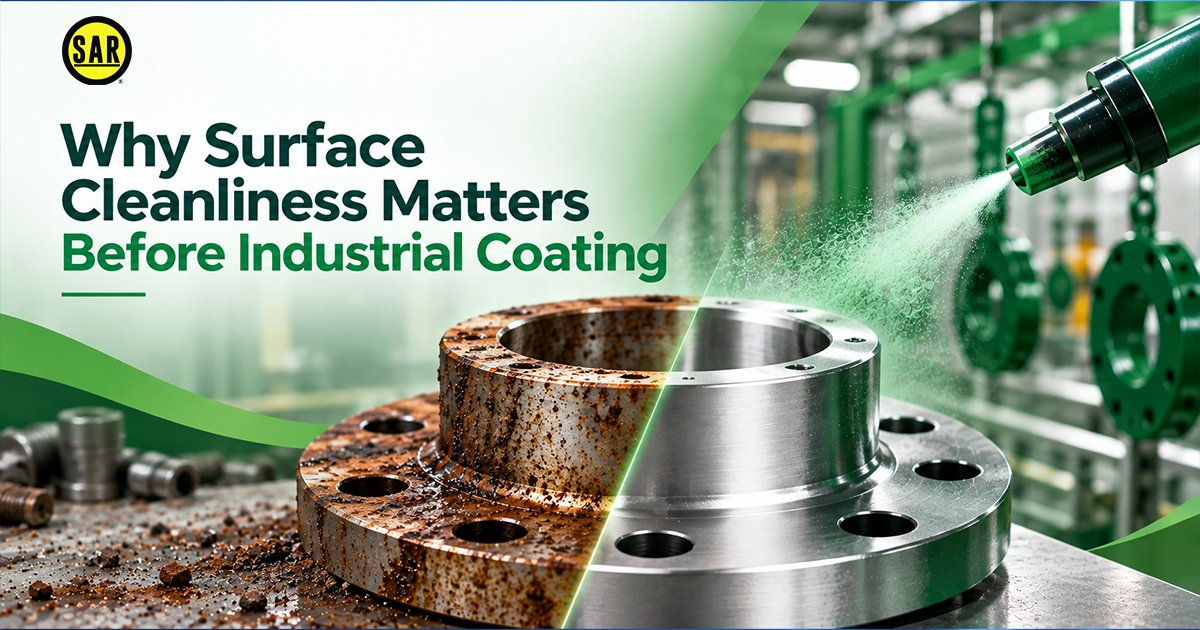
Why Surface Cleanliness Matters Before…
16/09/2026