How to Choose a Coating Vendor for Automotive OEM Supply
A wrong coating vendor doesn't show up as a problem on day one. It shows up six months later, when a batch of components fails salt spray testing at the OEM's end, or when a delivery slips because the vendor's plating line was down for maintenance nobody mentioned during the audit.
For procurement and quality teams sourcing coated or plated components for automotive supply chains, the vendor selection decision carries more weight than most RFQs suggest. This isn't just a price comparison exercise - it's a bet on whether your parts will pass PPAP, hold up in the field, and arrive on time for the next three years.
Here's what actually matters when you're shortlisting a coating vendor for OEM-grade work.
1. OEM Approval and Nomination History
Start here, not with pricing. A vendor's client list tells you more than their brochure does. Ask directly:
- Which OEMs or Tier-1s have approved them as a nominated supplier?
- Do they have PPAP sign-offs for similar components?
- Can they share reference contacts (not just logos on a website)?
A coating supplier that's already cleared Maruti Suzuki, Tata Motors, or a comparable OEM's approval process has been through the documentation, testing, and audit rigor your program will demand. That's not something you want to discover is missing after the tooling is already committed.
2. Process Range - Can They Cover Your Full BOM?
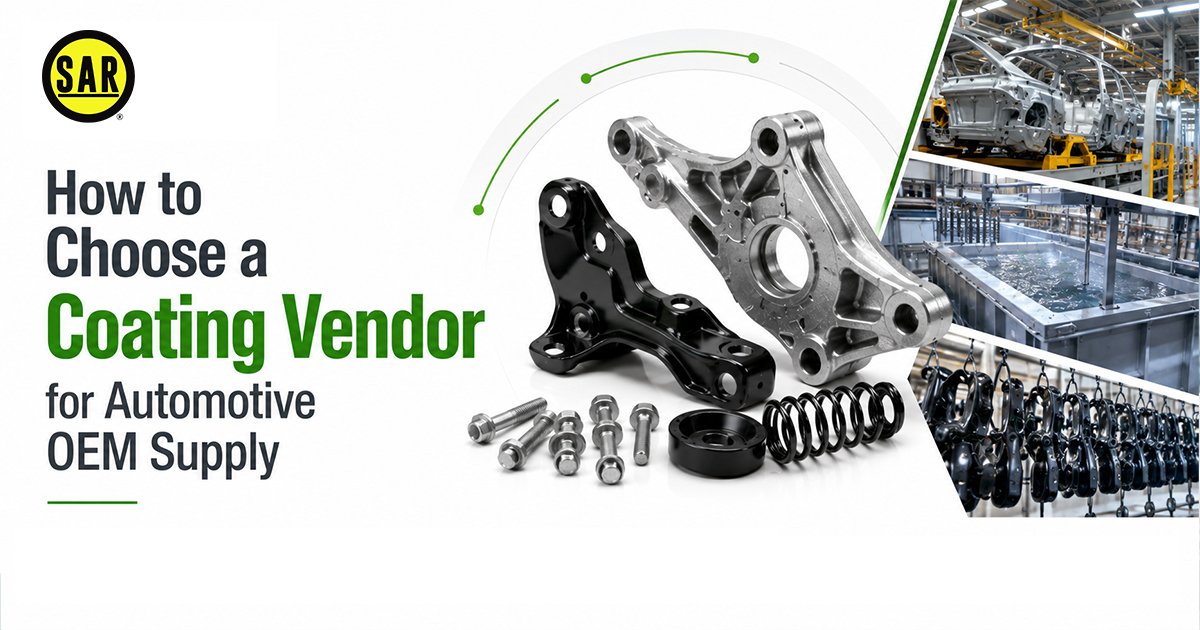
Most automotive components don't need just one coating type. A single vehicle program might need CED coating on brackets, zinc flake on fasteners, zinc-nickel on high-stress hardware, and powder coating on housings.
A vendor offering only one or two processes forces you to split sourcing across multiple suppliers - more logistics, more quality interfaces, more risk. Ask what's actually available in-house:
- CED Coating
- Zinc Plating (Rack and Barrel type)
- Zinc Flake (Magni / Geomet-type systems)
- Zinc-Nickel Plating
- Liquid Painting
- Powder Coating
- Hybrid Coating (dual-layer combinations)
A vendor covering this range under one roof simplifies your supply chain and gives you a single point of accountability for corrosion performance across the vehicle.
3. Salt Spray Test (SST) Data - Not Just Claims
Every vendor will tell you their coating resists corrosion. Ask for actual SST hour data, tested to the relevant standard (ASTM B117 or ISO 9227), for the specific coating and thickness you need.
There's a real difference between a coating that holds 200 hours before red rust and one certified for 1,000+ hours - and that difference decides whether your component survives its warranty period or comes back as a field complaint. Get the test reports, not just a number on a spec sheet.
4. Infrastructure and Capacity
A vendor's plant tells you what to expect once you're in production, not just at the trial stage. During plant visits or virtual audits, check:
- Number of coating lines and their automation level
- In-house testing lab (SST chamber, thickness gauges, adhesion testing)
- Multiple manufacturing units - a single-plant vendor is a single point of failure if there's a line breakdown or local disruption
- Effluent treatment and environmental compliance, since coating and plating processes are regulated
Vendors running multiple units (rather than one facility trying to serve every client) tend to handle volume swings and unplanned downtime better.
5. Quality Systems and Documentation
Automotive supply isn't just about the coating - it's about the paperwork behind it. Confirm:
- IATF 16949 or equivalent quality certification
- PPAP capability and experience
- Batch-wise traceability records
- Zero-defect track record or documented warranty failure rate
If a vendor can't produce clean documentation on request during the audit stage, that's a preview of what your quality escalations will look like later.
6. Turnaround Time and Logistics Fit
Coating is usually one step in a longer manufacturing chain, so delays here cascade. Ask about:
- Standard turnaround time for your part type and volume
- Proximity to your manufacturing or Tier-1 assembly location
- Buffer capacity for urgent or expedited orders
A vendor located within the same industrial belt (for example, Manesar or Bawal for NCR-based OEM supply chains) generally means shorter logistics cycles and easier coordination during ramp-up.
7. Sustainability and Compliance Posture
More OEMs are now asking suppliers about RoHS compliance, trivalent (vs hexavalent) chromium processes, and effluent treatment practices as part of vendor approval. A coating vendor already aligned with these standards saves you a compliance conversation later - and reduces the risk of a process getting flagged during an OEM sustainability audit.
A Practical Shortlisting Checklist
Before finalizing a coating vendor for OEM supply, confirm they can answer yes to these:
- Approved or nominated by at least one comparable OEM/Tier-1
- In-house process range matching your full BOM requirement
- SST test reports available for the specific coating and thickness needed
- Multiple manufacturing units or documented downtime contingency
- IATF 16949 (or equivalent) certification with PPAP experience
- Turnaround time compatible with your production schedule
- Trivalent/RoHS-compliant processes where applicable
Final Thought
Coating vendor selection rarely gets the scrutiny it deserves during sourcing, largely because coating is seen as a "finishing step" rather than a functional one. But corrosion failure is one of the most common reasons components are subject to warranty claims in the field. Treating vendor selection with the same rigor as your Tier-1 component sourcing - OEM history, process range, test data, and quality systems - is what protects that warranty period, not just the initial purchase order.
Latest News
How Coating Thickness Impacts Corrosion…
07/09/2026
How to Choose the Right…
26/08/2026